
Summer in Columbus and Your Garage Door: The Complete Homeowner's Guide to Beating the Heat
Ask most Columbus homeowners when their garage door is most at risk and they'll say winter. It makes sense. We brace for the cold, the ice, and the frozen openers, and once spring arrives, we tend to forget the door exists at all. But summer is quietly just as hard on a garage door, and in some ways harder, because the damage builds slowly and then announces itself all at once on the hottest day of the Summer, usually right when you're trying to leave for work or load the car for a trip.
When Columbus temperatures push into the 90s, your garage door is operating in conditions it simply wasn't dealing with back in May. Garage Door Installation projects completed before the peak of summer can also help homeowners avoid many of these seasonal performance issues. Metal expands, lubricants thin out, rubber seals soften, electronics run hotter, and your opener has to push harder to do the same job it did effortlessly a month ago. A door that felt completely normal a few weeks ago can suddenly move slowly, stick partway, grind, rattle, or reverse for no obvious reason. If you've found yourself standing in the driveway thinking "wait, is it the heat?", the answer is very often yes.
The encouraging part is that nearly all of it is preventable, and most of it is fixable quickly once you understand what's going on. Summer garage door problems follow predictable patterns, and a little attention at the right time keeps a small issue from snowballing into a stuck door, a snapped spring, or a no-open morning. This guide is the complete version: what summer heat does to every part of the door, why specific components struggle, how to read the warning signs, what you can safely check yourself, what genuinely needs a professional, what a tune-up and a repair actually involve, and how to decide between fixing and replacing.
We have been the local choice for garage door repair in Columbus, OH, for over 30 years. We're locally owned and operated, our technicians are licensed, insured, and certified, and we offer same-day service when it's available. So if your door is already acting up in the heat, help is close. And if it isn't yet, this is how you keep it that way through the season. Let's get into it.
What This Guide Covers
- Why is the garage the hottest room in your house in summer?
- How does summer heat affect your garage door?
- Why does my garage door open slowly in the summer?
- Garage door springs and summer heat: what to know
- Broken cables and misaligned tracks: the problems you can't see
- Rollers, hinges, and bearings: the small parts behind the big noises
- Is my garage door opener overheating? What to watch for
- Why is my garage door stuck in the heat?
- Heat or something else? How to read the warning signs
- What can I do myself, and what needs a professional?
- What does a professional summer tune-up include?
- Do insulated garage doors help in the summer?
- Should I get a garage door tune-up before vacation?
- Signs you should call now instead of waiting
- Repair or replace? How summer helps you decide
- How much does garage door repair cost in Columbus?
- What to expect when you call Door Depot
- How fast can you get same-day garage door repair in Columbus?
Why Is the Garage the Hottest Room in Your House in Summer?
Before we get into the door itself, it helps to understand the environment it's working in, because the garage is not like the rest of your home. Most garages are uninsulated or only lightly insulated; they sit under a roof that bakes in direct sun all afternoon, and they're often closed up tight for hours at a time. The result is that on a 90-degree Columbus Day, the inside of a garage can climb well past the outdoor temperature, turning into the hottest space on your property.
That trapped heat is exactly what your garage door and opener have to operate in. Metal components sit and soak in it, lubricants cook off faster than they would outdoors, and the opener's motor and circuit board run in an oven of their own making. It's why the same door that opened fine at 7 a.m. can struggle at 4 p.m., and why summer problems so often show up in the late afternoon. Understanding that the garage itself is a high-heat environment makes the rest of this guide click into place: nearly every summer symptom traces back to heat building up in a confined space and stressing parts that were already carrying a little wear.
How Does Summer Heat Affect Your Garage Door?
A garage door is a system of metal parts under tension, moving in sync dozens of times a day, and heat changes how every one of those parts behaves. The trouble usually isn't one dramatic failure. It's several small effects stacking up quietly until the door stops cooperating.
Understanding what's happening makes it far easier to catch a problem early, so here's what's actually going on inside your garage when the temperature climbs in Columbus.
- Metal tracks expand. In high heat, the tracks the rollers ride in can expand slightly and shift out of alignment, creating resistance and the catching, jerky movement you can feel and hear.
- Lubricant dries out faster. Heat thins and bakes off the lubricant on rollers, hinges, and springs, so friction climbs at exactly the moment the door needs to move smoothly.
- Rubber seals soften. The weather seal at the bottom of the door can soften and drag in extreme heat, adding resistance the opener has to fight on every cycle, and over time it can crack or warp.
- Springs work harder. Springs are already under heavy tension and strain further when heat weakens their lubrication, and a spring near the end of its life is far more likely to give out in summer.
- Openers overheat. The opener motor and electronics work harder against all of the above, and in a hot, poorly ventilated garage, they can overheat, stall mid-cycle, or shut down to keep from burning out.
The key thing to understand is that none of this requires new damage. A door that was "fine" can develop very real problems in summer simply because the heat exposes wear that was already quietly there. A roller that was a little worn, a spring with a few thousand cycles left, a track that was slightly off, a lubricant that was overdue for refreshing, all of it gets tested harder in Summer. That's also why early summer is the smartest time to have the door looked at, before a small, cheap fix becomes an urgent, expensive one. The rest of this guide breaks down each of these parts, so you know what to watch for and what to do.
Why Does My Garage Door Open Slowly in the Summer?
This is one of the most common questions Columbus homeowners type into a search bar in the summer, and the answer is usually friction. As the lubricant thins in the heat and the tracks expand, the entire system gets harder to move, so the opener takes longer to pull the door up and ease it back down. A door that used to glide can start to feel sluggish, hesitant, or like it's straining against something.
Slow operation is worth paying attention to because it seldom fixes itself. It's the door telling you the opener is working harder than it should, and that extra strain quietly shortens the life of both the opener and the hardware. The longer it runs that way, the more wear it accumulates, and what started as a minor annoyance in June becomes a real repair by August. A professional can re-lubricate the right parts (the ones a homeowner shouldn't touch), realign the tracks, and check the spring balance so the door moves the way it was designed to.
If your garage door is slow in the summer, it's an ideal candidate for a tune-up before it turns into a door that won't open at all on a Monday morning. Slowness is one of the friendliest warning signs the door gives you, because it shows up early and it's cheap to address. The homeowners who pay attention to it are the ones who avoid the emergency call later.
Garage Door Springs and Summer Heat: What Every Columbus Homeowner Should Know
If there's one part of your garage door that deserves respect in the summer, it's the springs. They do the heavy lifting, literally, counterbalancing the full weight of the door so the opener and your hands don't have to. Most homes use torsion springs mounted on a bar above the door, or extension springs running alongside the horizontal tracks, and both live under enormous tension every minute of every day, whether the door is moving or not.
Heat is hard on springs in two ways. First, it thins the lubrication that helps them flex smoothly, so they work with more friction and more metal-on-metal stress. Second, summer is simply when an already-aging spring tends to reach its breaking point, because the added strain finds the weakness that the milder months hadn't yet exposed. A broken spring is one of the most common summer service calls in Columbus, and it's also one of the most disruptive, because a door with a failed spring can become too heavy to lift safely and frequently won't open at all.
Here's the part that matters most: garage door spring repair and replacement is never do-it-yourself job. The tension stored in a spring is enough to cause serious injury, and the tools, training, and technique required are specific to the trade. We handle torsion and extension spring replacement quickly and safely, and we use high-cycle springs built for durability and smooth, long-lasting operation. If you hear a loud bang from the garage with no obvious cause, see a visible gap or separation in a spring, or suddenly find the door is far heavier than usual or won't stay open, stop using it and call a professional. Continuing to operate a door with a compromised spring puts strain on every other part and can be dangerous.
Broken Cables and Misaligned Tracks: The Summer Problems You Can't See
Springs get the attention, but the cables and tracks quietly do just as much work, and they have their own summer vulnerabilities. The lift cables run alongside the springs and help raise and lower the door evenly on both sides. When they fray, stretch, slip off the drum, or snap, the door can hang crooked, bind in the tracks, or stop moving entirely. Like springs, cables are under heavy tension and are not a safe DIY repair.
The tracks have a different summer problem. As metal expands in the heat, a track that was slightly out of alignment can shift just enough to create real resistance, and you'll often feel it as a door that catches, shudders, or moves unevenly on one side. Debris that collects over the season, leaves, dirt, and the occasional stray pebble, makes it worse. Misaligned tracks force the rollers and the opener to fight the whole way up and down, which accelerates wear on everything connected to them and is a frequent hidden cause of the slow, noisy operation people blame on the opener alone.
The good news is that cable and track issues are very fixable when they're caught early. We diagnose and repair broken cables, misaligned tracks, worn rollers, and the related hardware as part of routine garage door repair in Columbus, often the same day. The trick is not to wait. A track problem ignored in June frequently becomes a fully stuck or off-track door in Summer, and an off-track door is both a bigger repair and a safety hazard.
Rollers, Hinges, and Bearings: The Small Parts Behind the Big Noises
When a garage door suddenly gets loud in the summer, the culprit is usually one of the smaller, easily overlooked parts: the rollers that ride in the tracks, the hinges that let the door panels bend as they curve overhead, and the bearings the door turns on. These take a beating in normal use, and heat accelerates the wear by thinning the lubricant that keeps them quiet.
Worn rollers grind and squeal. Dry or failing hinges rattle and pop. Bad bearings produce a rhythmic squeak with every cycle. Individually, none of these is an emergency, but together they make a door that's louder and rougher every week, and they put extra load on the opener and the tracks. A door that has gotten noticeably noisier over the summer is almost always telling you these small parts need attention, and addressing them is one of the most satisfying, affordable fixes there is. The door goes from a neighborhood announcement to nearly silent.
This is exactly the kind of wear a tune-up is built to catch. A technician can replace worn rollers, tighten and lubricate hinges, and check the bearings before any of it cascades into a track or opener problem. If your door has developed a new soundtrack this summer, it's worth a look.
Is My Garage Door Opener Overheating? What to Watch For
Opener motors are one of the first things to struggle in a hot Columbus garage, and the good news is they tend to give clear warning signs before they quit completely. The motor is being asked to overcome all that added summer friction, and on top of that, both the motor and its circuit board are sitting in a garage that's hotter than the air outside. Watch for these signs, especially during the hottest hours of the afternoon:
- The opener feels hot to the touch after it runs
- The door starts, then reverses or stops partway through a cycle
- It takes noticeably longer to open or close than it used to
- The remote or wall button becomes unresponsive in peak afternoon heat, then works again once the garage cools down
- The opener runs, but the door barely moves, a sign the motor is straining against something
If that afternoon-only pattern sounds familiar, the heat is almost certainly the culprit. An opener that acts up at 4 p.m. and behaves itself at 8 a.m. is a classic summer signature, and it's worth addressing rather than living with. Sometimes it's a simple fix, like clearing the underlying friction the motor is fighting, since an overheating opener is frequently a symptom of a hardware problem rather than a failing motor. Other times, especially with units that are more than a decade old, it's a sign the opener is nearing the end of its life. A quick professional diagnosis takes the guesswork out, and we service and replace all major opener brands, including LiftMaster and Linear, so you're not left guessing whether to repair or replace.
Why Is My Garage Door Stuck in the Heat?
A stuck garage door is the summer emergency nobody plans for, and it almost always traces back to one of the issues already covered: an expanded, misaligned track binding the rollers, a broken spring or cable that's thrown the door off balance, or an overheated opener that's given up for the afternoon. Occasionally, it's something simpler, like debris wedged in the track or a safety sensor knocked out of alignment, which is always worth a quick visual check before you assume the worst.
What you should not do is force it. Repeatedly hitting the opener button or trying to muscle a stuck door open can turn a single failed part into several, and if a spring or cable is involved, forcing the door can be genuinely dangerous. The safer move is to stop, look for anything obviously blocking the tracks or the sensors near the floor, make sure the opener isn't simply in a manual or vacation lock mode, and if nothing's clearly wrong, call a professional rather than fighting it.
A stuck door is exactly the kind of situation our same-day service in Columbus is built for, and many of these calls are completed within hours. Because a stuck door often means your car is trapped inside or your home is left open, it's the one summer problem where waiting genuinely costs you, and where a fast local response makes the biggest difference.
Heat or Something Else? How to Read the Warning Signs
Not every summer garage door problem is caused by heat, and it helps to know how to tell the difference, because it changes how urgently you should act. Heat-related issues tend to be intermittent and time-of-day dependent: the door is fine in the cool morning and struggles in the hot afternoon, then recovers overnight. That pattern points strongly to friction and overheating that a tune-up can resolve.
Mechanical failures, on the other hand, tend to be consistent and get worse regardless of the time of day. A door that's equally balky at 8 a.m. and 4 p.m., a noise that's present on every single cycle, or a visibly crooked door is telling you a part has worn out or broken rather than simply gotten hot. Those don't improve overnight, and they usually escalate. And a few signs are urgent no matter the cause: a loud bang followed by a heavy or stuck door, a visibly separated spring, a frayed or hanging cable, or a door that's off its tracks. When you see those, stop using the door and call.
If you're not sure which category you're in, that uncertainty is itself a good reason to call. A short diagnostic visit from a Columbus technician will tell you definitively whether you're looking at a tune-up, a targeted repair, or something that needs attention today, and you'll know exactly what it costs before any work begins.
What Can I Do Myself, and What Needs a Professional?
Some summer garage door care is perfectly safe for a homeowner, and doing it can genuinely help your door run better and last longer. Other parts are genuinely dangerous and should never be a DIY project, no matter how simple a video makes them look. Here's a clear line you can trust.
Safe to do yourself
- Visually inspect the door, tracks, springs, cables, and hardware for anything obviously loose, worn, frayed, or out of place
- Gently clear leaves, dirt, and debris out of the tracks (cleaning only, never bending or adjusting them)
- Check the weather seal along the bottom for cracking, hardening, or drag
- Make sure nothing is blocking the safety sensors near the floor and that their lenses are clean
- Test the auto-reverse by placing a small object in the door's path and confirming it reverses on contact
Leave this to a professional
- Lubricating springs, bearings, rollers, and hardware with the correct products and amounts
- Track alignment and roller or hinge replacement
- Opener diagnosis, motor and circuit-board issues, and safety sensor realignment
Never do this yourself
- Spring tension adjustments or spring replacement, and any cable work
That last group is the one that matters most. Garage door springs and cables are under extreme tension and cause serious injuries every year when people try to handle them without training and the right tools. There's no shame in calling, and there's a real cost in not. When in doubt, a professional inspection is faster than guessing, and it's a great deal cheaper than an emergency room visit or a door that fails while you're halfway out of town. A good rule: if it involves tension, the motor's internals, or the electronics, it's a job for a technician.
What Does a Professional Summer Tune-Up Include?
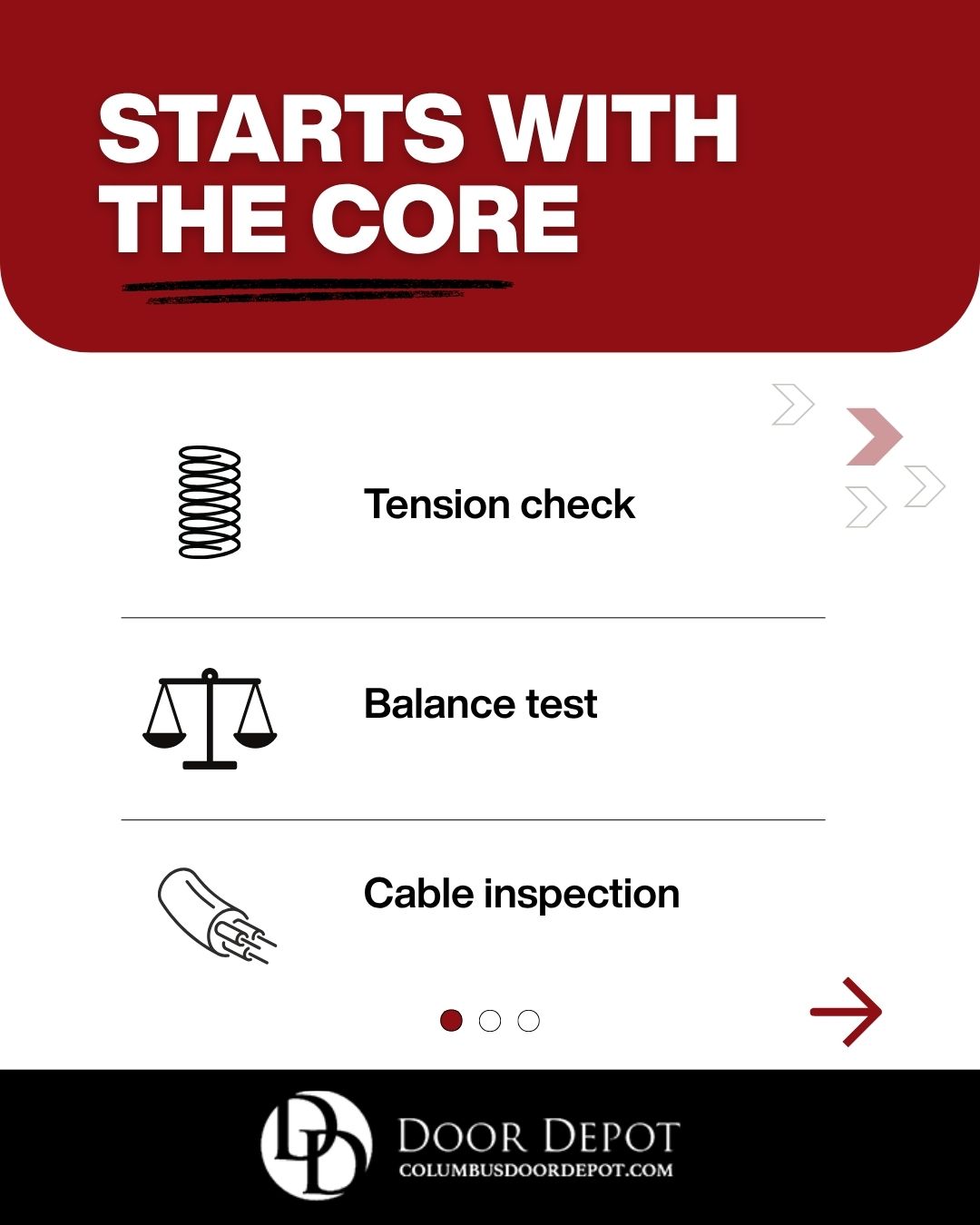
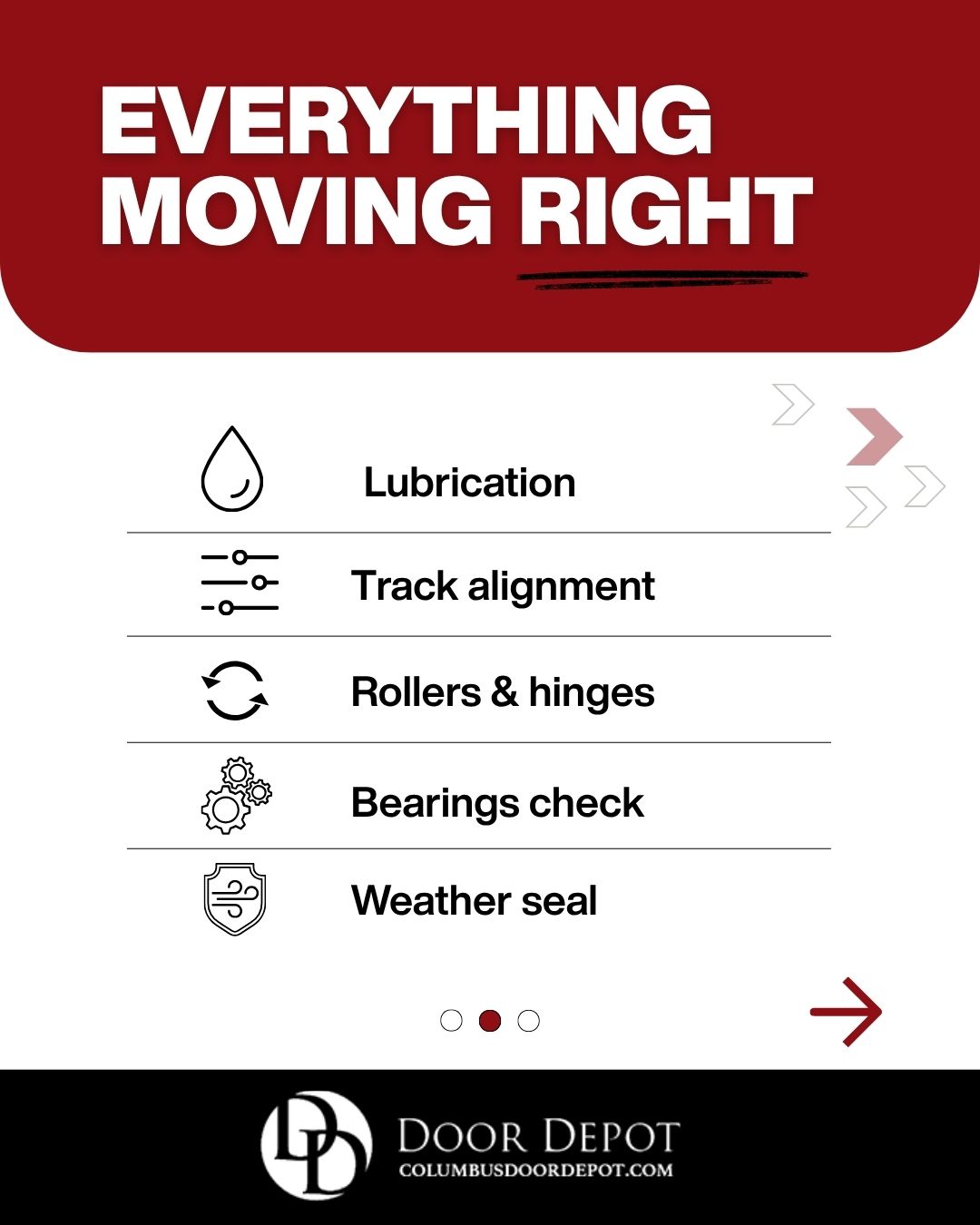
A garage door tune-up is the single best way to get ahead of summer problems, because it catches the small stuff before the heat turns it into a breakdown. It's a short, affordable visit, and it touches every part of the system that summer tends to stress. When we perform a maintenance visit, a typical tune-up covers:
- Spring tension and door balance check
- Lubrication of all the moving parts that need it, with the correct products
- Track alignment inspection and adjustment
- Roller, hinge, and bearing wear assessment
- Cable inspection for fraying or wear
- Weather seal condition check
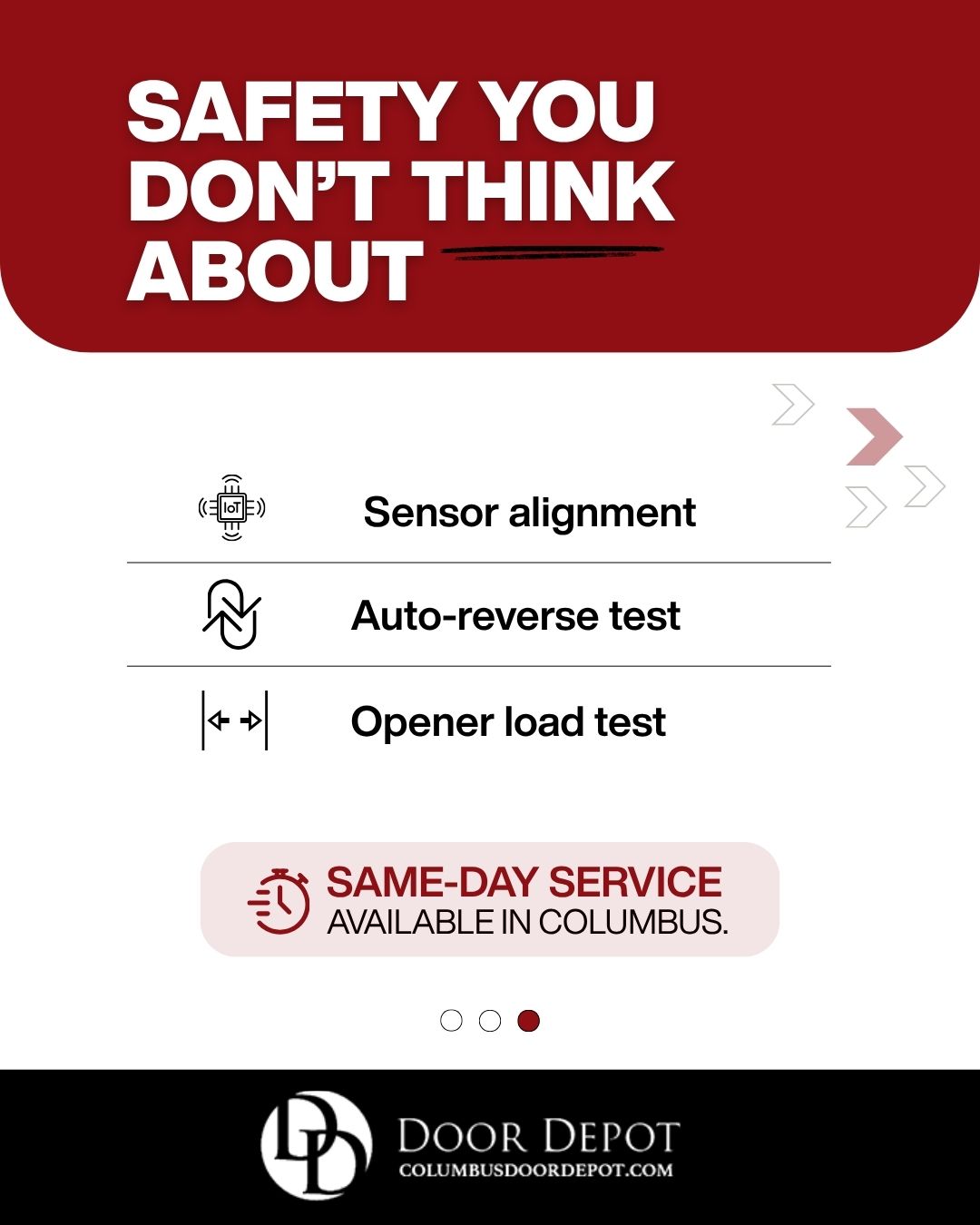
- Safety sensor alignment and auto-reverse test
- Opener performance and motor load test
Think of it the way you'd think about an oil change. It's cheap, it's routine, and it's far better than waiting for the warning light. A tune-up doesn't just prevent the summer emergencies; it makes the door quieter, smoother, and longer-lived, and it gives a trained technician a chance to spot the worn spring or fraying cable that would otherwise have failed on the worst possible day. For most Columbus homes, one tune-up a year is enough to keep the door reliable, and early summer is the ideal time to do it.
Do Insulated Garage Doors Help in the Summer?
If your garage turns into an oven every afternoon, or if you have living space above or beside the garage that's hard to keep cool, this is a question worth asking. An insulated garage door won't air-condition the space, but it does meaningfully slow the transfer of heat through the largest opening in that wall, which keeps the garage cooler and steadier than a thin, non-insulated door allows. For attached garages, that can take some load off the rooms next door and the HVAC system that serves them.
There's a quieter benefit too. Insulated doors are generally built with a more rigid, multi-layer construction, which makes them sturdier, quieter, and often longer-lived than a basic single-layer door. So the comfort upgrade tends to come with a durability and noise upgrade as well. It's one of the reasons homeowners replacing an old, dented, or noisy door frequently choose to step up to an insulated model at the same time.
We install a full range of residential and commercial garage doors, including insulated, traditional, carriage-house, and modern styles. If the heat in your garage has you thinking about it, or if your current door is aging and the summer struggles are adding up, it's worth a conversation about whether an insulated replacement makes sense for your home. As always, you'll get an honest recommendation and upfront pricing, with no pressure toward the bigger ticket if a repair is the smarter move.
Should I Get a Garage Door Tune-Up Before Vacation?
If you're traveling this summer, yes, and it's one of the most overlooked pieces of trip prep there is. Columbus summers are peak travel season, and there are few worse feelings than a garage door that fails while you're out of town, leaving your home less secure or a returning family locked out of their own garage at the end of a long drive.
A pre-vacation inspection is a cheap piece of mind. It catches the minor issues that summer heat loves to escalate, so you can leave knowing the door will open, close, and lock up the way it should while you're gone. It also means your house-sitter, neighbor, or returning family isn't left troubleshooting a door they didn't expect to fail, and it protects everything you store in the garage from a door that won't close securely. Early summer is the ideal window to book it, before the calendar fills with everyone else's vacation prep and before the heat truly peaks. And because we offer same-day service when it's available, even a last-minute decision the week before a trip is usually workable.
Signs You Should Call Now Instead of Waiting
Some garage door quirks can comfortably wait for a scheduled visit. Others are the door warning you that a real failure is coming, and in summer, those warnings tend to escalate fast. Call sooner rather than later if you notice any of these:
- The door moves unevenly, jerks, or looks crooked during operation
- New grinding, squealing, or rattling noises that weren't there before
- The opener struggles, hesitates, or takes noticeably longer than usual
- The door reverses before it fully closes, and it isn't just a blocked sensor
- Visible wear, fraying, or a gap in the cables, rollers, or springs
- The door has become noticeably heavy to lift by hand
These are the symptoms that tend to snowball in the heat. Caught early, most are simple, affordable repairs. Left alone, they have a way of becoming an emergency call at the least convenient possible moment, the morning of a trip, the start of a workday, the evening you have people coming over. If your door is showing any of them, it's worth a quick call to a Columbus technician who can tell you honestly whether it's urgent or can safely wait. Honest assessments are part of how we work, and sometimes the answer is genuinely "keep an eye on it, here's what to watch for."
Repair or Replace? How Summer Heat Helps You Decide
Summer has a way of forcing a question homeowners have been putting off: is it time to repair this door again, or is it time to replace it? Heat tends to surface because a door that needs frequent summer repairs, makes more noise every year, or is visibly aging is often trying to tell you something. There's no one-size answer, and a good technician won't pretend there is.
As a rule of thumb, a repair makes sense when the door is structurally sound and the problem is a specific worn part, a spring, a cable, a roller, or an opener component. Those are targeted fixes that restore a good door to good working order. Replacement starts to make more sense when repairs are piling up year after year, when the door is significantly dated, dented, or damaged, when it's poorly insulated for a space you're trying to keep comfortable, or when an upgrade would meaningfully improve insulation, quiet, curb appeal, and your home's value at the same time.
We install a wide range of residential and commercial doors, from traditional and carriage-house styles to modern and insulated options, but we'll always walk you through repair versus replacement honestly, with upfront pricing and no pressure. Often the right answer is a simple repair that buys years of reliable use. Sometimes it's a replacement that solves several problems at once. The goal is the choice that's right for your home and your budget, not the bigger ticket.
How Much Does Garage Door Repair Cost in Columbus?
It's the question everyone wants answered first, and the honest version is that it depends on the issue. A worn roller, a misaligned track, a snapped spring, and an opener replacement are very different repairs, so a single flat number wouldn't tell you anything useful, and any company that quotes one sight unseen isn't doing you a favor. What we can promise is how the pricing works: We provide an accurate estimate before any work begins, explain repair versus replacement options clearly, and give upfront pricing with no hidden fees or surprises at the end.
That transparency matters most in summer, when an urgent repair can feel like a moment where you have no leverage. You will always be with us. We'll tell you what's wrong, what it costs, and what your options are, and you decide from there. There's no obligation and no pressure, and if a small repair will do the job, that's what we'll recommend. If you'd like a sense of pricing before you call, our website includes a breakdown of what affects garage door repair cost in Ohio, and a quick phone call will get you a clear estimate for your specific situation.
What to Expect When You Call Door Depot
If you've never used a garage door company before, here's exactly how it works with us, so there are no surprises. It's a simple, four-step process built around being fast, clear, and respectful of your time.
- Schedule your service: Call (614) 739-8335 or request a free estimate online. We'll get you on the schedule, often the same day for urgent issues.
- Expert diagnosis and repair: A licensed, insured, certified technician arrives, identifies the issue, explains it plainly, and gives you upfront pricing before any work begins.
- Final testing and cleanup: Once the work is done, we test the door through a full cycle to confirm it's running smoothly and safely, then clean up the work area.
- Follow-up support: We stand behind the work and are here if you have questions afterward, because a one-time fix isn't the goal; a door you can rely on is.
No pressure, no upsells you didn't ask for, and no mystery on the bill. Just a straightforward fix from a local team that's been doing this in Columbus for over 30 years.
How Fast Can You Get Same-Day Garage Door Repair in Columbus?
Often the same day you call. We offer same-day and emergency garage door repair across Columbus and Central Ohio when it's available, and many calls are completed within hours. We're locally owned and operated. Our technicians are licensed, insured, and certified, and we arrive ready to diagnose and fix most issues on the first visit, with common parts on the truck. You get an honest assessment of repair versus replacement, upfront pricing, and a door that works when you need it most.
We proudly serve Columbus and the surrounding communities, including Delaware, Dublin, Hilliard, Grove City, Lewis Center, Gahanna, and Westerville. Wherever you are in Central Ohio, you're talking to a local team, not a national call center routing your job to whoever's available. If your garage door is stuck, slow, noisy, off its tracks, or your opener is overheating in the heat, don't wait for it to fail. Call (614) 739-8335 for same-day garage door service in Columbus, OH, or request a free estimate online, and we'll take it from there.
Why Columbus Homeowners Choose a Local Company
When a garage door fails in the summer, it's tempting to call the first national number that pops up in a search. The trouble is that those calls often route to a dispatcher who's never been to your neighborhood, can't always commit to a real arrival time, and may push a one-size-fits-all pricing model. A local company works differently, and that difference shows up most when you actually need help fast.
We have been part of the Columbus community for over 30 years. That longevity isn't just a number on a website; it means our technicians know the homes and the common door types around Central Ohio, we're accountable to the neighbors we serve, and we're genuinely able to be there the same day when it counts. We're licensed, insured, and certified; we give honest, upfront assessments, and we treat repair-versus-replacement as your decision to make with good information, not a sales target. For a service you only think about when something's wrong, local accountability is worth a lot.
Frequently Asked Questions
Does summer heat affect garage door springs?
Yes. Springs are already under heavy tension, and heat thins the lubrication that helps them work, so a spring that's worn or near the end of its life is more likely to strain or fail in summer. Spring repair and replacement should always be handled by a professional, never as a DIY project, because the stored tension can cause serious injury.
Why does my garage door open slowly in the summer?
Usually friction. Heat thins the lubricant on rollers and hinges and can expand the tracks slightly, so the opener has to work harder, and the door moves more slowly. A tune-up that re-lubricates the right parts and realigns the tracks typically restores smooth operation.
Why is my garage door so loud all of a sudden?
Heat dries out the lubricant on the rollers, hinges, and bearings, and worn versions of those small parts get loud quickly. New grinding, squealing, or rattling usually points to rollers or hinges that need lubrication or replacement, which is a simple, affordable fix.
How often should a garage door be serviced in Columbus?
Once a year is a good rule for most homes, and early summer is an ideal time given the heat and the travel season. A door that gets heavy daily use, or one already showing symptoms, benefits from a check sooner.
My garage door opener stopped working in the heat. What should I do?
First, see whether it works again once the garage cools, which points to heat-related overheating. Either way, avoid forcing the door, and call for a professional diagnosis. We service and replace all major opener brands and offer same-day service in Columbus when available.
Why is my garage door stuck, and what should I do?
A stuck door usually means a misaligned track, a broken spring or cable, an overheated opener, or something blocking the tracks or sensors. Don't force it, since that can cause more damage or injury. Check for obvious blockages, then call a professional. Stuck-door calls are exactly what our same-day service is for.
Do you offer same-day and emergency garage door repair?
Yes. We provide same-day and emergency garage door repair throughout Columbus and nearby communities when available, and many calls are completed within hours. Call (614) 739-8335 to check availability for your address.
Get Ahead of the Heat: Schedule Your Summer Tune-Up
Summer in Columbus is hard on garage doors, but the problems it creates are almost always preventable. A quick tune-up before the heat peaks keeps your door running smoothly, protects your opener, quiets the rollers and hinges, and catches a tired spring or fraying cable before it fails, which means one less thing to worry about when you head out of town. And if something's already going wrong, the fastest fix is a local technician who can often be there the same day.
Here's how to get started:
- Schedule a summer tune-up: request a free estimate at columbusdoordepot.com or call (614) 739-8335.
- Need it today: ask about same-day service when you call. Many summer repairs are completed within hours.
- Already a customer: pay your invoice and reach our team anytime at columbusdoordepot.com.
This content is for informational purposes only. Garage door springs and cables are under high tension and should be serviced only by trained professionals.