
Top 5 Signs You Need a Garage Door Spring Replacement in Columbus
Your garage door is more than just a way to get your car in and out. It’s a main part of your home’s security, curb appeal, and daily convenience. One of the most important components of your garage door system is its springs. These springs do the heavy lifting, balancing the door and making it easy to open and close. When they start failing, the results can be dangerous and costly. Knowing the signs that your garage door springs need replacement can save you both time and money.
In this article, we’ll go through the top five signs that your garage door springs are wearing out, explain why timely replacement matters, and provide tips for keeping your garage door safe and reliable
How Garage Door Springs Work
Garage doors are heavy, often weighing hundreds of pounds, and opening them manually or even with an automatic opener without springs would be nearly impossible. The two main types of garage door springs are torsion springs and extension springs.
- Torsion Springs: These are mounted above the door opening and use torque to lift the door. They are common in modern garage doors and can last anywhere from 10,000 to 20,000 cycles (one cycle equals one full opening and closing).
- Extension Springs: These run along the sides of the door and stretch as the door closes. They are often found in older or lighter garage doors.
Both types of springs wear down over time. Metal fatigue, temperature changes, and frequent use can all weaken them. Once a spring fails, the door can become dangerously unbalanced or completely inoperable.
Why Ignoring Spring Problems Can Be Risky
It’s easy to take your garage door for granted until something goes wrong. Ignoring a worn or broken spring isn’t just inconvenient; it’s unsafe. Here’s why:
- Safety Hazard: A broken spring can cause the garage door to fall suddenly, potentially injuring anyone nearby.
- Door Damage: Operating a door with a weak spring puts stress on other components like the opener, cables, and tracks, leading to more expensive repairs.
- Security Risk: A malfunctioning garage door may not close fully, leaving your home vulnerable to intruders.
Recognizing spring problems early helps avoid accidents, costly repairs, and stress.
Signs You Need a Garage Door Spring Replacement
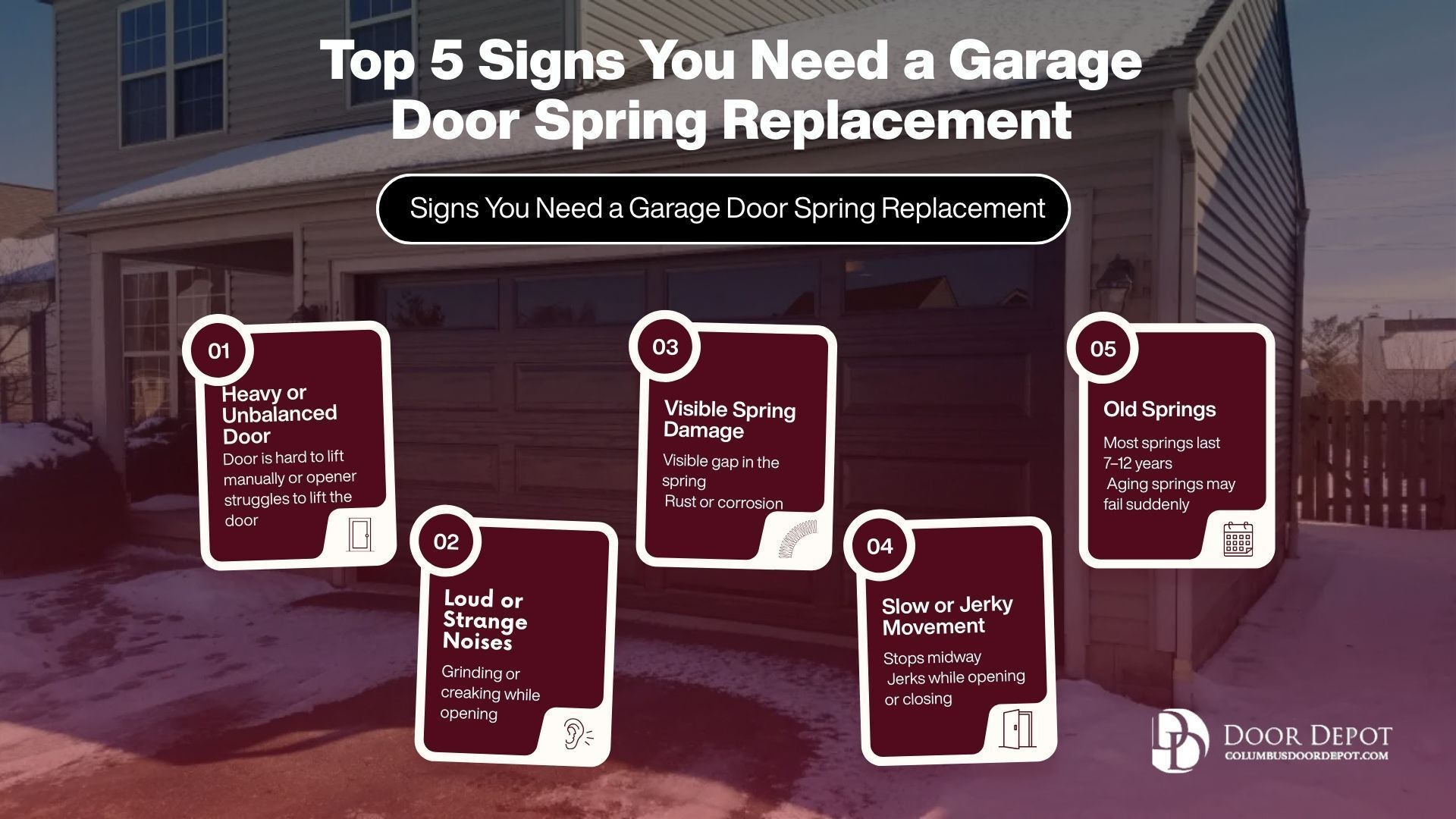
1. The Door Feels Heavy or Unbalanced
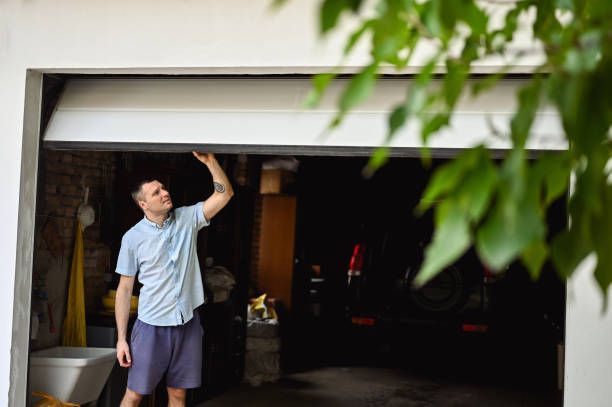
A garage door with healthy springs should lift smoothly with minimal effort. If your door feels unusually heavy when opening manually, or if the automatic opener strains to lift it, that’s a warning sign. Springs bear the weight of the door, so when they weaken, the opener does most of the work, which can lead to motor burnout.
Another clue is an uneven door. If one side rises faster than the other or the door tilts when opening, it’s a sign that a spring is failing. Left unchecked, this imbalance can damage tracks and rollers over time.
2. You Hear Loud or Strange Noises
Metal springs under tension can make faint noises as they operate, but loud snapping, creaking, or grinding sounds are not normal. These noises often indicate that a spring is stretched beyond its limit or nearing the end of its life.
Pay attention to these sounds during both opening and closing. A spring that breaks suddenly can make a loud bang, which is dangerous if someone is nearby. Hearing odd noises consistently is a cue to schedule a professional inspection immediately.
3. Visible Gaps or Damage in the Springs
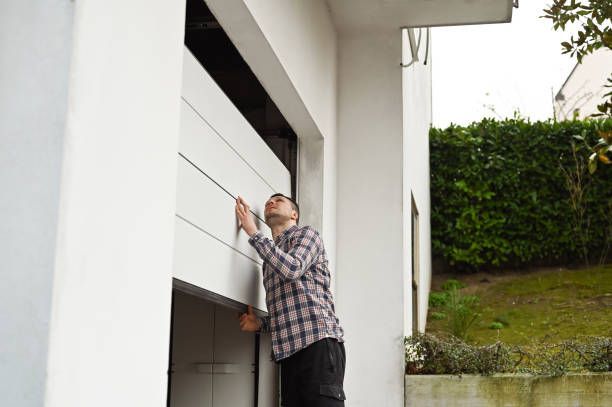
Sometimes the warning signs are obvious. Inspect your springs for:
- Gaps: A visible gap in a torsion spring is a clear indication that it has broken.
- Rust or Corrosion: Rust weakens the metal, shortening the spring’s lifespan.
- Wear and Fraying: Extension springs may show fraying or stretching, signaling that replacement is needed.
If you spot any of these issues, avoid using the door until the springs are repaired. Handling broken springs yourself can be extremely dangerous due to the high tension involved.
4. Slow or Jerky Operation
A smooth garage door should move consistently. If your door moves more slowly than usual, hesitates midway, or jerks when opening or closing, the springs may be losing tension.
Weak springs can’t counterbalance the door properly, which forces the opener to work harder. Over time, this extra strain can damage the opener, tracks, and other components. Detecting sluggish movement early allows for timely replacement before additional problems occur.
5. Springs Are Over 10 Years Old
Even if your garage door seems fine, age alone can be a factor. Most garage door springs are rated for 10,000 to 20,000 cycles, which generally equates to about 7–12 years for an average household.
If your springs are approaching or exceeding this age range, it’s wise to schedule an inspection. Preemptive replacement can prevent a sudden failure and reduce the risk of injury or damage. Think of it as preventative maintenance, saving time, money, and frustration in the long run.
What to Do if You Notice These Signs
Garage door springs are under extreme tension, and attempting to replace them yourself can be very dangerous. Here’s the safest approach:
- Stop Using the Door: If you notice any of the signs above, avoid operating the garage door.
- Call a Professional: Look for certified, insured technicians who specialize in garage door spring replacement. In Columbus, local experts like Door Depot provide same-day service and thorough inspections.
- Ask About Replacement Options: Technicians can recommend the best type of spring for your door, whether torsion or extension, and advise on premium options for durability.
Schedule Routine Maintenance: Regular inspections and lubrication can extend the life of new springs and reduce unexpected problems.
Benefits of Timely Spring Replacement
Replacing your garage door springs promptly comes with multiple advantages:
- Enhanced Safety: Properly functioning springs reduce the risk of injury from sudden door drops.
- Longer Door Lifespan: Balanced doors reduce wear on openers, cables, and rollers.
- Improved Daily Convenience: Doors operate smoothly and reliably, making your daily routine easier.
- Protection for Your Property: Fully functioning doors ensure your garage remains secure.
Choosing professional service guarantees correct garage door installation, proper tension adjustment, and compliance with safety standards.
How Professionals Replace Garage Door Springs
When you hire a certified garage door service provider, you can expect a methodical process:
- Inspection and Assessment: Technicians evaluate the springs, cables, and door balance.
- Spring Selection: They select a spring with the correct size and tension rating.
- Safe Removal and Installation: Using specialized tools, the old springs are carefully removed, and new ones are installed with precise tension.
- Testing: The door is opened and closed multiple times to ensure smooth operation.
Maintenance Advice: Experts provide tips on lubrication and regular checks to extend spring life.
Maintaining Your Garage Door Springs
After replacement, you can extend spring life with simple maintenance:
- Lubricate Regularly: Use a silicone-based lubricant to reduce friction and wear.
- Keep the Door Balanced: Test balance by disconnecting the opener; the door should stay in place when halfway open.
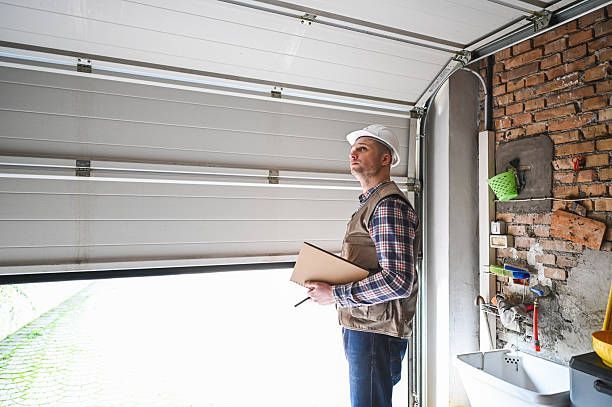
- Inspect for Wear: Check springs, cables, and rollers every six months.
- Avoid Excessive Force: Never manually force a door open or closed, as this can strain the springs.
These small steps help prevent premature spring failure and keep your garage door running smoothly for years.
Conclusion
Garage door springs may seem small, but they play a crucial role in the safety, security, and functionality of your home. Recognizing the signs of wear, heavy doors, strange noises, visible damage, jerky movement, or age can save you from dangerous accidents and costly repairs.
When you notice any of these warning signs, call us immediately.
We can replace the springs safely, restore smooth operation, and help maintain the overall health of your garage door system. Investing in a timely spring replacement ensures peace of mind, convenience, and a garage door that works reliably when you need it most.
For Columbus homeowners looking for trusted service, Door Depot provides prompt, professional, and reliable garage door spring replacement, along with ongoing support for all your garage door needs.
FAQs
Q1: How long do garage door springs typically last?
A: Most garage door springs last between 7 and 12 years, depending on usage and maintenance.
Q2: Can I replace garage door springs myself?
A: It’s not recommended. Springs are under extreme tension and can cause serious injury if handled incorrectly. Always hire a certified technician.
Q3: How much does spring replacement cost in Columbus, OH?
A: Costs vary based on spring type and labor. A professional service provider can give an accurate quote after inspection.
Q4: How do I know if my door has torsion or extension springs?
A: Torsion springs sit above the door, while extension springs run along the sides. A professional can confirm and recommend replacement options.
Q5: How often should I have my garage door inspected?
A: Semi-annual inspections are ideal to ensure springs, cables, and openers are in good condition.