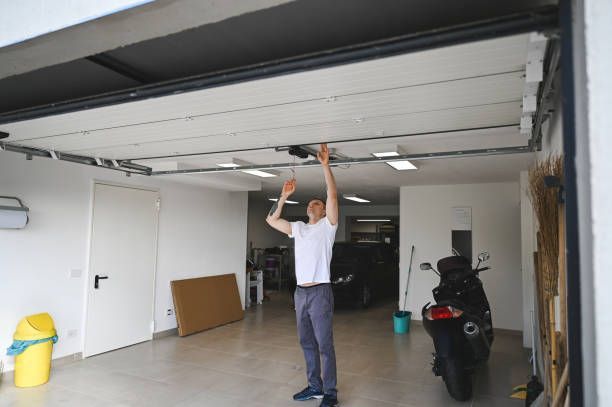

The Garage Door Tune-Up, Line by Line, Before a Columbus Winter
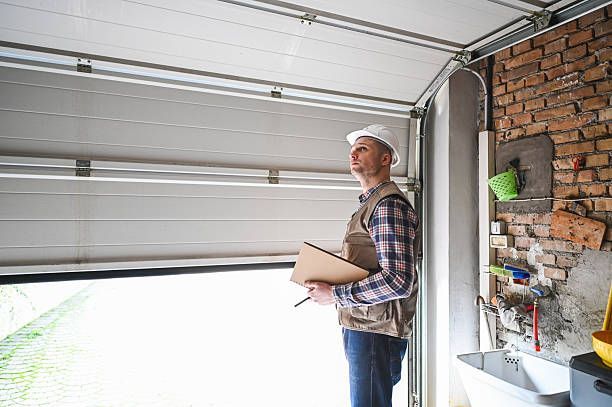
A garage door tune-up is a maintenance visit, and nothing on it should be a mystery. A technician looks over the hardware, works the door by hand, tests the opener's two safety reversals, lubricates the parts the door maker says to lubricate, and corrects whatever those checks turn up. Below is that visit in the order it happens, with a plain note on which lines you can do yourself and which ones belong to someone trained to work on springs.
TL;DR
A garage door tune-up has four parts: a visual inspection, a hand test of the door with the opener disconnected, two opener safety tests, and lubrication. The trade association for door and opener makers, DASMA, tells homeowners to run the inspection and the tests every month, and to leave bottom brackets, red fasteners, cables, and supports to trained technicians. Clopay, a door manufacturer, recommends silicone-based lubricant on hinges, rollers and springs because it keeps its viscosity through a freezing winter, and says to keep lubricant off the tracks. In Columbus, the National Weather Service puts the normal first 32F night at October 27, and as early as October 14 in one year out of ten. A homeowner in Dublin, Westerville, Hilliard or Grove City can do about half the list. The adjusting half is ours.
What Is a Garage Door Tune-Up, and What Is It Not?
A garage door tune-up is scheduled maintenance on a door that still works: inspect, test, lubricate, adjust. A repair is a different job, and a sales call is a different thing again. If the visit finds a worn roller or a fraying cable, that becomes a separate conversation with its own quote.
No single industry document defines the list, which is why one shop advertises a dozen points and the next one advertises thirty. The number tells you very little. What matters is whether the lines the door maker and the trade association publish are on it.
So that is what this page is built from. Every line below traces to Clopay's maintenance guidance or to DASMA's published safety material, not to any one company's inspection sheet, ours included. If you are comparing offers around Columbus, hold each one up against it.
| Part of the visit | What it answers | Source of the line |
|---|---|---|
| Look | Is anything worn, loose, or damaged? | DASMA monthly visual check |
| Hand test | Do the springs carry the door, or does the opener? | DASMA balance test |
| Opener tests | Will the door reverse off an obstruction? | DASMA 2x4 and photo eye tests |
| Lubricate | Are the moving parts running dry? | Clopay lubrication guide |
| Adjust | What did the first four turn up? | Trained technician only |
The Visit in Walking Order
A technician works a door from the outside in: listen first, then take the opener out of the picture, then put it back and test it. The table follows that order. The hand test and both opener tests come from the
DASMA safety and maintenance guide that the association publishes for homeowners.
| Number | Line | What gets checked | What a fail looks like | You or a technician? |
|---|---|---|---|---|
| 1 | Full cycle, eyes and ears | The door runs up and down once while someone watches and listens | Jerking, a crooked travel, a new squeal or bang | You can watch. A technician knows what the noise means |
| 2 | Opener disconnected | With the door closed, the manual release takes the opener off the door | The release will not let go, or the door is not closed first | You, with the door fully down |
| 3 | Hinges, rollers, panels | Wear and damage at each hinge, each roller, and each section | Cracked hinge, wobbling roller, split panel edge | You look. A technician replaces |
| 4 | Springs, cables, bottom brackets | Visual condition only | A gap in a spring, loose strands, a bracket pulling away | Eyes only for you. Hands are for a technician |
| 5 | Hand operation | The door is lifted and lowered by its handles | It drags, binds or feels heavy | You, if it moves freely. Stop if it does not |
| 6 | Balance | The door is left partly open, 3 to 4 feet off the floor | It drops or climbs instead of staying put | You can test. Only a technician corrects it |
| 7 | Tracks | Wiped clean, checked for dents and debris | Grit in the channel, a roller rubbing the track wall | You wipe. A technician moves a track |
| 8 | Lubrication | Hinge pins, roller bearings, springs, bearing plates | Dry squeak, or old lubricant caked with dirt | You can, with the right product. Part of our visit |
| 9 | Bottom seal | The door closes tight to the floor along its full width | Daylight under the door, a cracked or flattened seal | You look. A technician refits |
| 10 | Contact reversal | A 2x4 laid flat in the door's path | The door does not stop and reverse on contact | You test. A technician adjusts the opener |
| 11 | Photo eyes | Beam blocked while the door closes; sensor height measured | The door closes with the beam blocked, or the eyes sit higher than 6 inches | You test. A technician repositions |
| 12 | Wall button and labels | Button height and the door's warning labels | Button within a child's reach, labels missing or unreadable | You look. A technician relocates |
Twelve lines, and a homeowner's hands belong on fewer than half of them. That split is the real content of any tune-up.
Line 12 looks minor. The same DASMA guide says the wall button should sit at least 5 feet above the nearest standing surface, out of a child's reach and in sight of the door. It takes ten seconds to check, and it is easy to overlook.
Which Lines Can a Homeowner Check Without Tools?
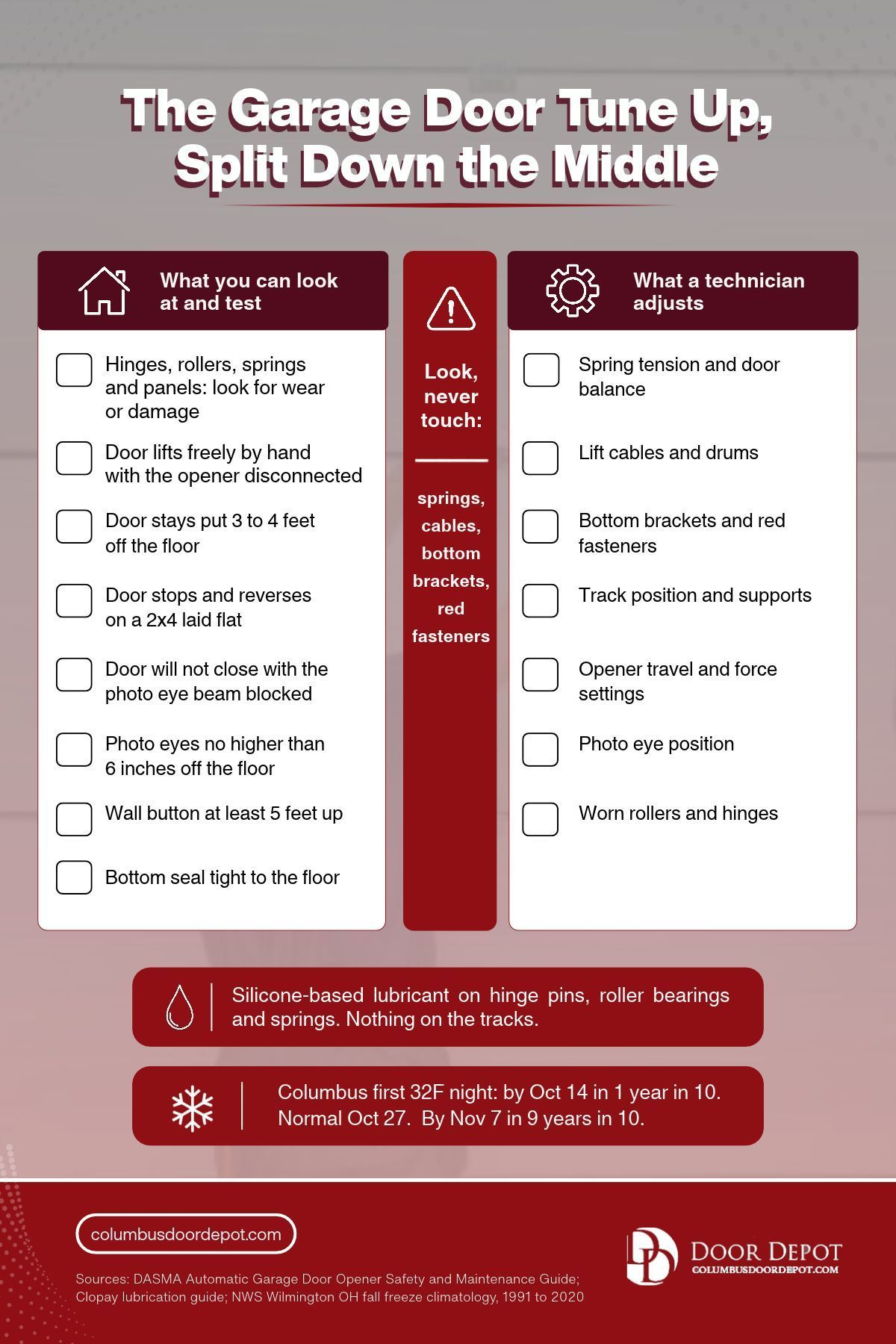
More than most people expect. DASMA's guide tells homeowners to make inspection and testing of the door and opener a monthly routine, and it lays the routine out in three passes that need no tools beyond a short length of lumber.
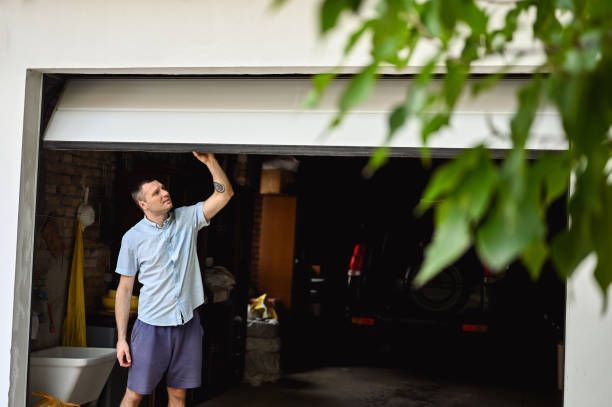
Start with the door closed. Pull the manual release so the opener is disconnected, then work through this:
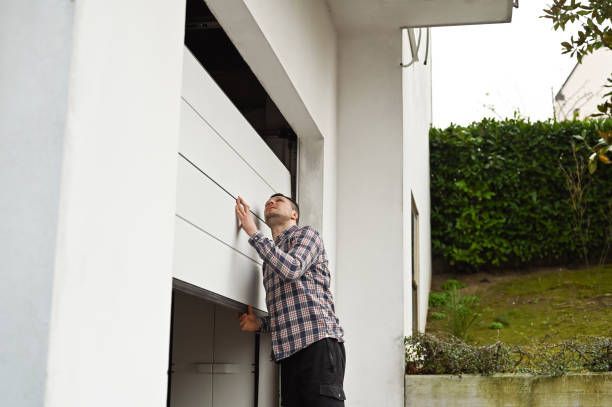
- Look over the hinges, rollers, springs, and panels for wear or damage.
- Lift the door by its handles. It should move freely.
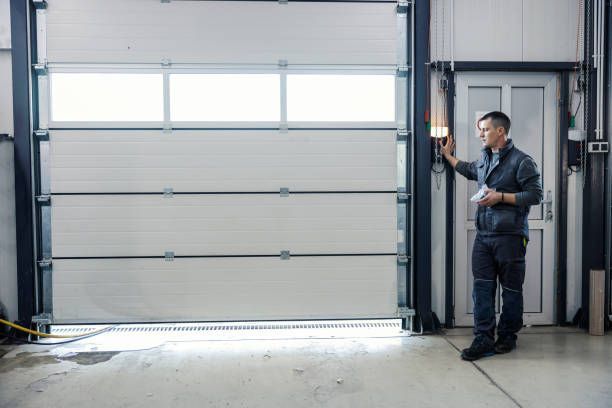
- Let go with the door 3 to 4 feet off the floor. A balanced door stays there.
- Reconnect the opener and open the door.
- Lay a 2x4 flat on the floor in the door's path and close it. The door should stop when it touches the board, then reverse.
- Wave something through the photo eye beam while the door is closing. It should not close unless the wall button is held down.
- Measure the photo eyes. They should sit no higher than 6 inches off the garage floor.
That is the whole monthly check, and it covers the same ground as the testing half of a technician's visit. A door that passes all of it in October is in decent shape. One failed line is enough reason to stop testing and call.
The balance test is the one that matters most
An opener will happily drag an unbalanced door up and down for a long time. That hides the problem. With the opener disconnected, the springs have to hold the door on their own, and a door that sinks from waist height is telling you they no longer do.
Do not try to fix that yourself. Correcting balance means changing spring tension, which is the single most dangerous adjustment on the door.
Look, Never Touch: Springs, Cables and Bottom Brackets
Three parts of the door are for looking at only. DASMA's guide puts the warning in a box above the checklist: springs are under high tension, and nobody but a trained door systems technician should loosen or adjust bottom brackets, red colored fasteners, cables, or supports.
The red fasteners are the tell. Amarr, another door maker, prints it on the first page of its residential installation instructions: red fasteners hold parts that are under extreme tension and are not to be loosened or removed except by garage door professionals. The bottom bracket in each lower corner of the door is one of those parts, because the lift cable hooks onto it. DASMA's Technical Data Sheet 172, which covers garage door labels, describes a label whose only job is to warn that the bottom bracket is under extreme spring tension.
| Part | What you may do | What you may not do |
|---|---|---|
| Torsion or extension springs | Look for a gap, rust, or a stretched coil | Wind, unwind, loosen or remove |
| Lift cables | Look for loose strands and slack | Pull, re-seat or re-hook |
| Bottom brackets | Check that the label is there and readable | Tighten or loosen any fastener on it |
| Anything fastened in red | Leave it | Put a wrench on it |
This matters because ordinary maintenance advice says to tighten loose hardware, and that advice is sound for a hinge screw. It does not cover the red ones. If a bracket or a cable looks wrong, we wrote a separate guide on reading a loose cable from the garage floor, and the short version is to leave the door closed and unplug the opener.
Lubricant: Where It Goes and Where It Does Not
Lubrication is the line that changes most with the season, and it is the one people get wrong in both directions. Too little and the door squeals. Too much, or the wrong product, and every moving part collects grit.
Clopay's lubrication guide is specific about the product. It recommends a silicone-based lubricant for hinges, rollers, and springs, on the grounds that silicone keeps its viscosity across a wide temperature range, through a hot summer and a freezing winter. White lithium grease is its second choice, meant for metal-to-metal contact and used sparingly because it attracts dirt. WD-40 and oil-based products are on its avoid list for the same reason.
| Part | Lubricate? | Clopay's instruction |
|---|---|---|
| Hinge pins | Yes | A small amount on the pin, excess wiped off |
| Roller bearings | Yes | Into the bearing, at the gap between the roller shaft and its collar |
| Torsion spring | Yes | Along its length, with care, since it is under high tension |
| Extension spring pulleys | Yes | The pulleys, not the spring body |
| Bearing plates above the door | Yes | Periodic, no dripping |
| Tracks | No | Wipe with a damp cloth. Lubricant makes rollers slide, and the opener works harder |
Two details are worth knowing. The same guide tells owners of nylon rollers not to spray the roller, while Clopay's separate care sheet on noisy rollers aims the lubricant at the shaft and collar and not at the wheel. Read together, the point is that lubricant belongs in the bearing and never on the rolling surface or the track.
How often? Clopay's answer is every 3 to 6 months, toward the 3-month end for a door that gets heavy daily use. For a Columbus house where the garage is the front door, that puts one of those dates squarely in the fall.
Cold is why the timing matters here. Metal contracts in the cold and tired lubricant stiffens, so a door that was only a little dry in September gets loud in January. Putting fresh silicone on while the garage is still mild is easier work than chasing a squeal in a snowstorm.
When Does the First Freeze Reach Columbus?
The normal first 32F night at the Columbus airport is October 27. That date comes from the
National Weather Service fall freeze climatology for central Ohio, built on the 1991 to 2020 record, and it gives the booking deadline for a pre-winter visit better than any rule of thumb.
| Columbus (KCMH) first 32F reading | Date |
|---|---|
| Earliest on record | September 21 |
| One year in ten, by | October 14 |
| Normal | October 27 |
| Nine years in ten, by | November 7 |
| Latest on record | November 27 |
Read that as a window, not a date. By the middle of October, one in ten has already had its first freeze. By the end of the first week of November, nine in ten have.
The airport is also not your driveway. The Weather Service notes that official temperatures are taken five feet above the ground, and that on a typical frost night the reading can be 36 degrees at that height while it is already 32 at ground level. A garage door's bottom seal sits on the slab. It meets freezing conditions before the forecast number says so.
Setting matters too. The same table lists Newark, east of Columbus, with a normal first freeze of October 18, nine days ahead of the airport, and the Weather Service says rural and urban settings can vary widely. Open lots on the edges of Delaware County and western Franklin County, out past Hilliard, should not assume the airport's date.
A frozen seal is where a marginal door gets caught out. If the seal has flattened or cracked, water sits under it, freezes overnight, and holds one corner of the door to the concrete while the opener pulls. That is how a door that only needed a tune-up in October becomes a repair call in December.
What Only a Technician Should Adjust
Everything the checks turn up that involves stored spring force or the opener's settings. The homeowner list ends at "contact a trained door systems technician," and this is where our list begins.
- Spring tension, when the door fails the balance test in either direction.
- Lift cables and drums, when a cable is slack, frayed, or sitting unevenly.
- Bottom brackets and anything held with red fasteners.
- Track position and the supports that hang the horizontal track from the ceiling.
- Opener travel and force settings, when the door fails the 2x4 test.
- Photo eye position and wiring, when the beam test fails, or the eyes sit too high.
- Worn rollers and hinges, which come out and go back in under load.
Notice what is not on that list: wiping tracks, lubricating hinges, running the tests. Those are yours if you want them. Our summer guide to garage doors in the Columbus heat lists what our own maintenance visit covers, and it overlaps this page line for line on balance, lubrication, cables, the weather seal, and the reversal tests.
When a visit turns up a part that has to be replaced, that is a repair and not maintenance. Springs, cables, rollers, and openers are covered on our garage door repair page, and a good technician will show you the worn part before quoting it.
Questions to Put to Any Tune-Up Offer
A point count is marketing until you see the points. Before booking with anyone, us included, ask for the list and check it against five things.
| Ask | Why |
|---|---|
| Is the opener disconnected and the door tested by hand? | No hand test, no balance check |
| Are both reversal tests run, contact and photo eye? | They are the safety half of the visit |
| Which lubricant goes on, and where? | Silicone or white lithium on hinges, bearings and springs. Nothing on the tracks |
| Is the bottom seal checked against the floor? | It is the part the first freeze finds |
| Do I get the findings in writing? | So a later repair quote can be compared with what was seen today |
Price is the other question, and this page deliberately does not answer it. What a visit costs sits with the rest of our pricing in what garage door work costs in Ohio, so there is one place to keep it current.
One more thing to listen for. If a maintenance visit turns into pressure to replace springs that passed the balance test, ask to see the test repeated. A balanced door stays where you leave it. You can watch that happen.
A note on doors that double as the front door
Where the garage is the household's main way in and out, the door runs far more cycles a day than its owner would guess. Clopay's shorter lubrication interval is the one to follow for a door like that. Our Dublin service page has a seasonal care section on the same theme, written for the northwest suburbs.
Book the Tune Up Ahead of the First Freeze
Run the monthly check this weekend. It costs nothing, it takes a few minutes, and it tells you whether your door needs a visit or only a can of silicone spray.
If it fails the balance test, fails either reversal test, or shows anything wrong at a spring, cable, or bottom bracket, stop there. Leave the door closed and get it looked at before the cold arrives. We serve Columbus, Dublin, Westerville, Hilliard, Grove City, and the neighboring suburbs, and you can reach us through Columbus Door Depot. Tell us which line failed. It makes the first conversation shorter.
Frequently Asked Questions
What does a garage door tune-up include?
A garage door tune-up includes a visual inspection of the hardware, a hand test of the door with the opener disconnected, a balance test, the contact and photo eye reversal tests, lubrication of hinges, roller bearings, and springs, and any adjustment those checks call for.
Can I do a garage door tune-up myself?
You can do the inspecting, testing, and lubricating half. DASMA's homeowner guide covers the visual check, the balance test, and both reversal tests. Spring tension, cables, bottom brackets, and anything held by red fasteners should only be adjusted by a trained door systems technician.
What lubricant should I use on a garage door in winter?
Clopay recommends a silicone-based lubricant for hinges, rollers, and springs because it keeps its viscosity through a freezing winter. White lithium grease is an alternative for metal-to-metal parts. It advises against WD-40 and oil-based products, which attract dirt, and against lubricating the tracks.
When should I schedule garage door maintenance in Columbus?
Before the first freeze. The National Weather Service lists October 27 as the normal first 32F night at the Columbus airport, with one year in ten reaching it by October 14. A visit in early to mid-October beats that date in most years.
How do I know if my garage door is balanced?
Close the door, pull the manual release, and lift the door by hand to 3 or 4 feet off the floor. Let go. A balanced door stays partly open at that height. If it drops or rises, the springs need adjusting by a technician.